1.2 - Types of Plate Boundaries
⭐ +260 XP- ✓State that plate boundaries may be convergent, divergent, or transform.
- ✓Explain that the continents have changed position over an extended period (continental drift).
- ✓Use boundary type to link patterns of volcanoes and earthquakes to location (Caribbean examples).
- ✓Apply boundary knowledge to hazard awareness and land-use decisions.
⏱ 0 mins🎯 52 marks
Engage
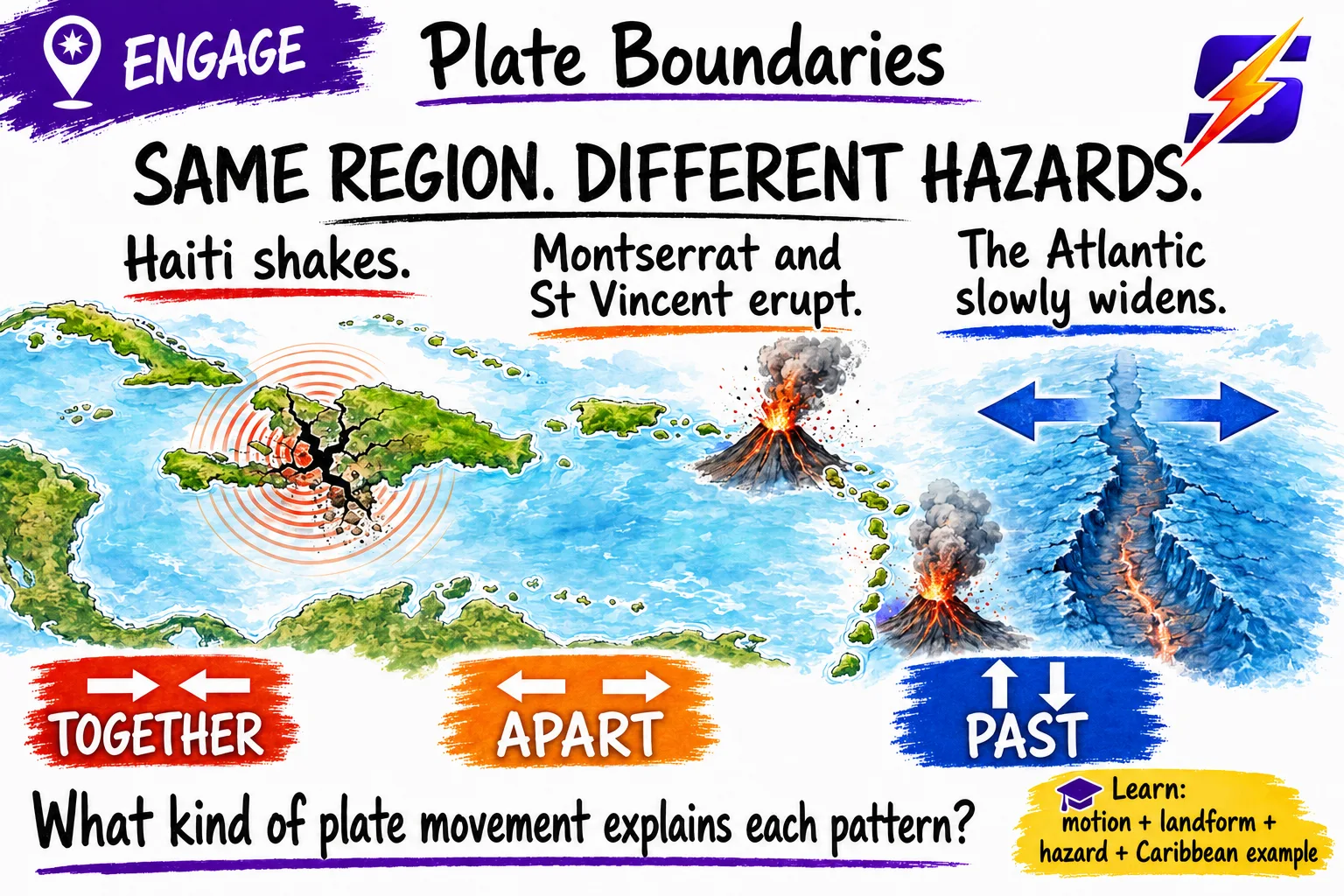
Haiti has damaging earthquakes; Montserrat and St Vincent can erupt volcanoes. Why the difference? The Atlantic Ocean is slowly widening, centimetre by centimetre, yet it changes our world map over time. Today, you’ll learn the 3 boundary behaviours that control these patterns: convergent, divergent, and transform.
1 / 4
← swipe to move between steps →
0%
Lesson progress0 / 52 marks
✓ 0 correct✕ 0 mistakes0 / 31 answered
Let's get started, you've got this! 💪