1.1 - The Earth's Crust and Plate Tectonics
⭐ +275 XP- ✓State that the Earth has a thin crust of solid rock.
- ✓Identify the mantle and the core as the layers beneath the crust.
- ✓Explain that the crust is broken into slowly moving plates.
- ✓Define plate tectonics as the study of crustal plates and their movement.
- ✓Relate volcanoes and earthquakes to plate margins (plate boundaries).
⏱ 0 mins🎯 55 marks
Engage
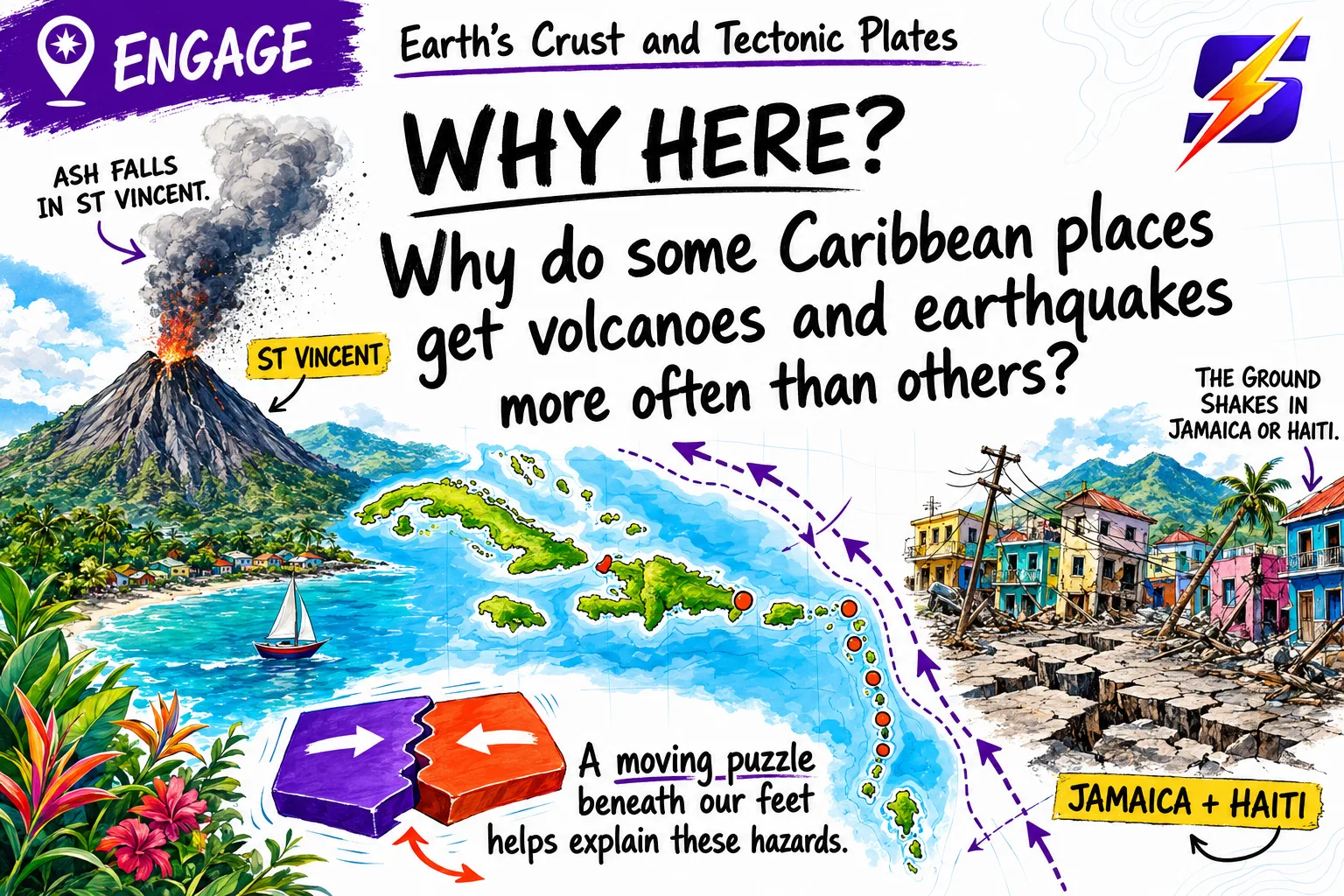
Imagine this: you’re in St Vincent and suddenly ash begins to fall from the sky… or you feel a shaking under your feet in Jamaica or Haiti. Why do some Caribbean places get volcanoes and earthquakes more often than others? Today you’ll learn the ‘moving puzzle’ idea that helps geographers explain these hazards.
1 / 3
← swipe to move between steps →
0%
Lesson progress0 / 55 marks
✓ 0 correct✕ 0 mistakes0 / 23 answered
Let's get started, you've got this! 💪