10.3 - Quantitative Electrolysis
⭐ +210 XP- ✓Apply Faraday’s Laws of Electrolysis to calculate quantities of substances deposited or liberated.
- ✓Relate current, time, and charge to the amount of substance produced during electrolysis.
- ✓Identify major industrial uses of electrolysis such as extraction of metals, electroplating, and purification.
- ✓Interpret the quantitative relationship between the mass of product and the electric charge passed.
⏱ 0 mins🎯 42 marks
Engage
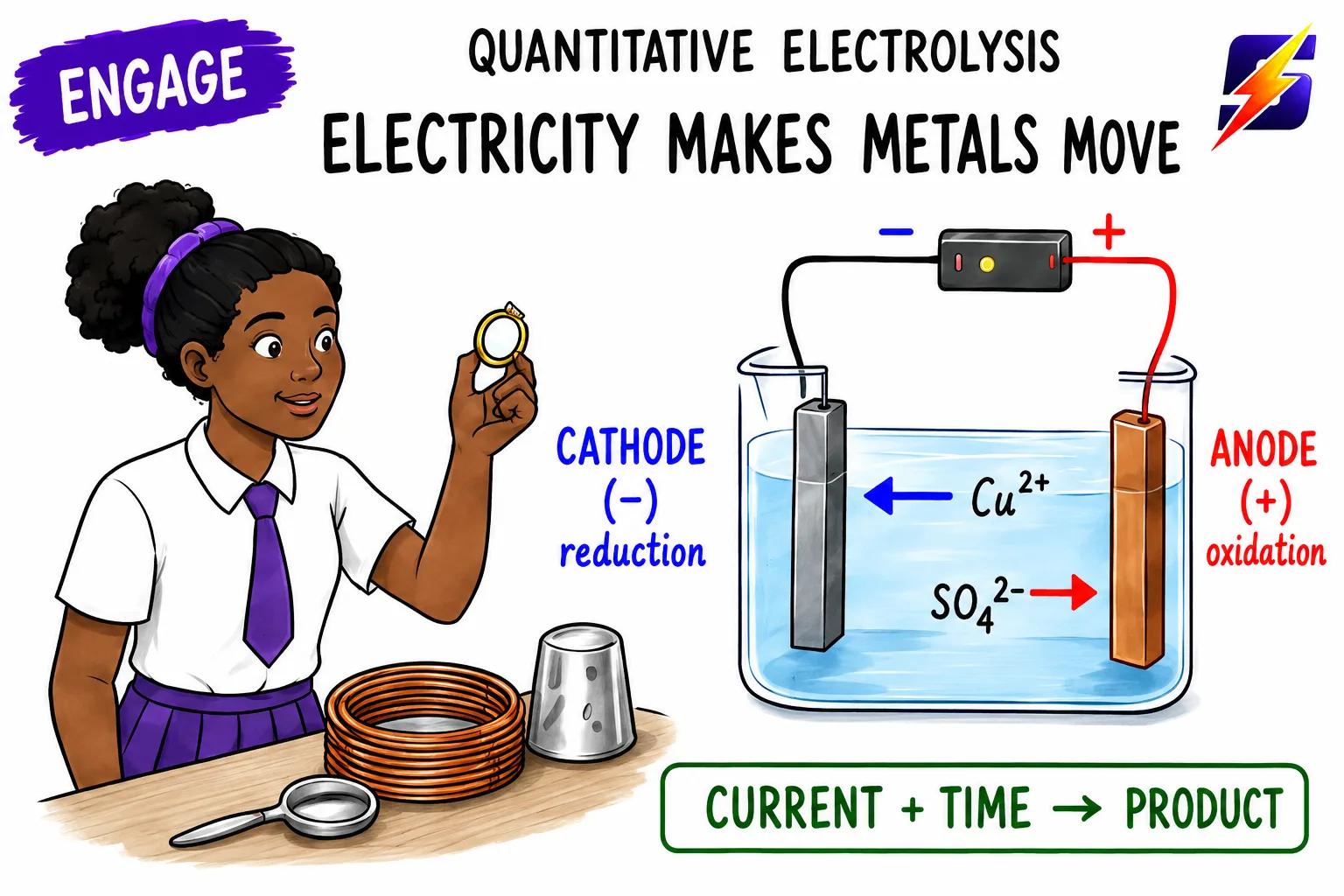
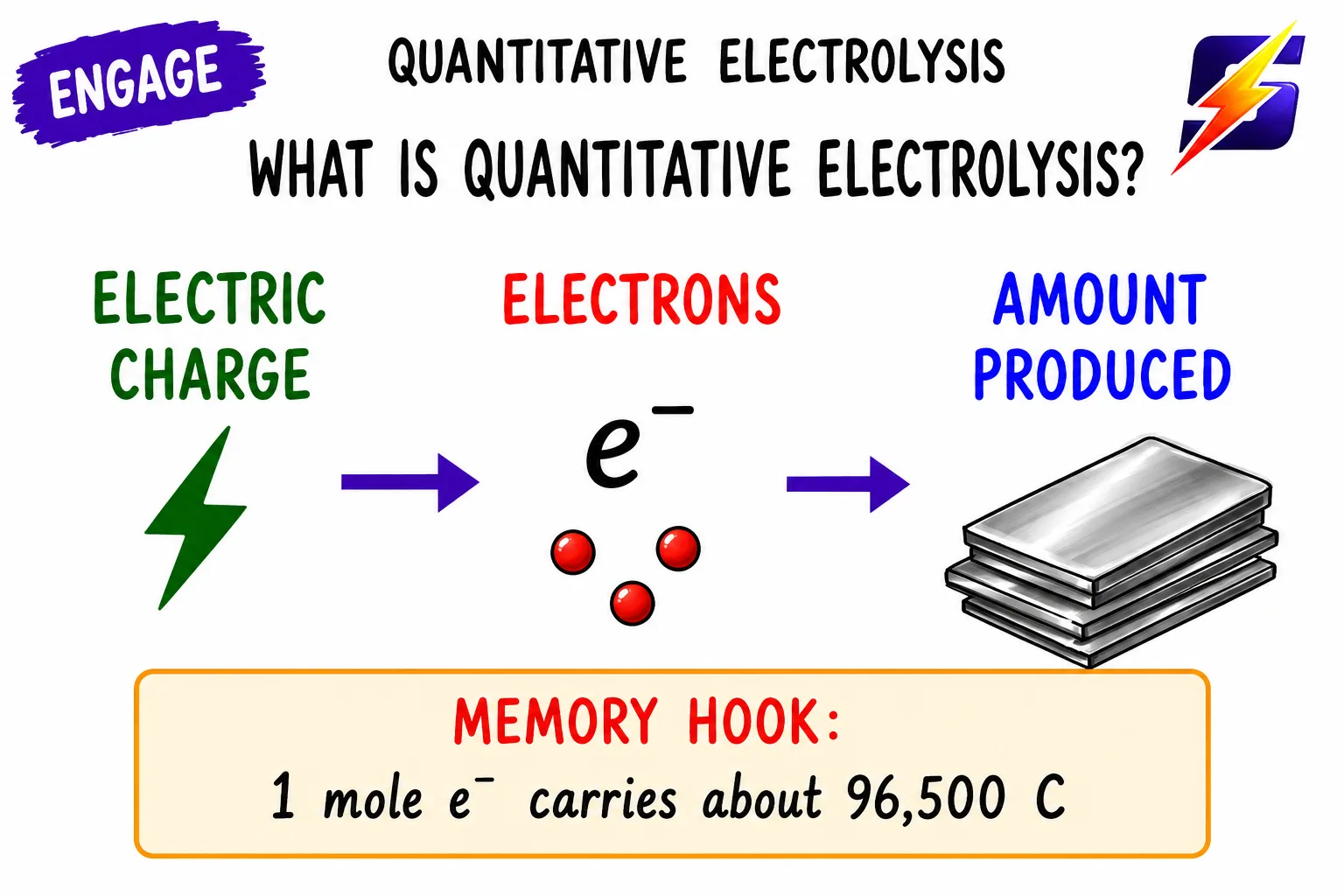
Have you ever wondered how aluminium is extracted from Jamaica’s bauxite, or how shiny jewellery and pure copper are produced? The secret lies in electrolysis, not just for decomposition, but for quantitative calculations and industrial-scale applications! Let’s explore how science and maths meet to power Caribbean industries.
1 / 5
← swipe to move between steps →
0%
Lesson progress0 / 42 marks
✓ 0 correct✕ 0 mistakes0 / 32 answered
Let's get started, you've got this! 💪