11 - Rates of Reaction
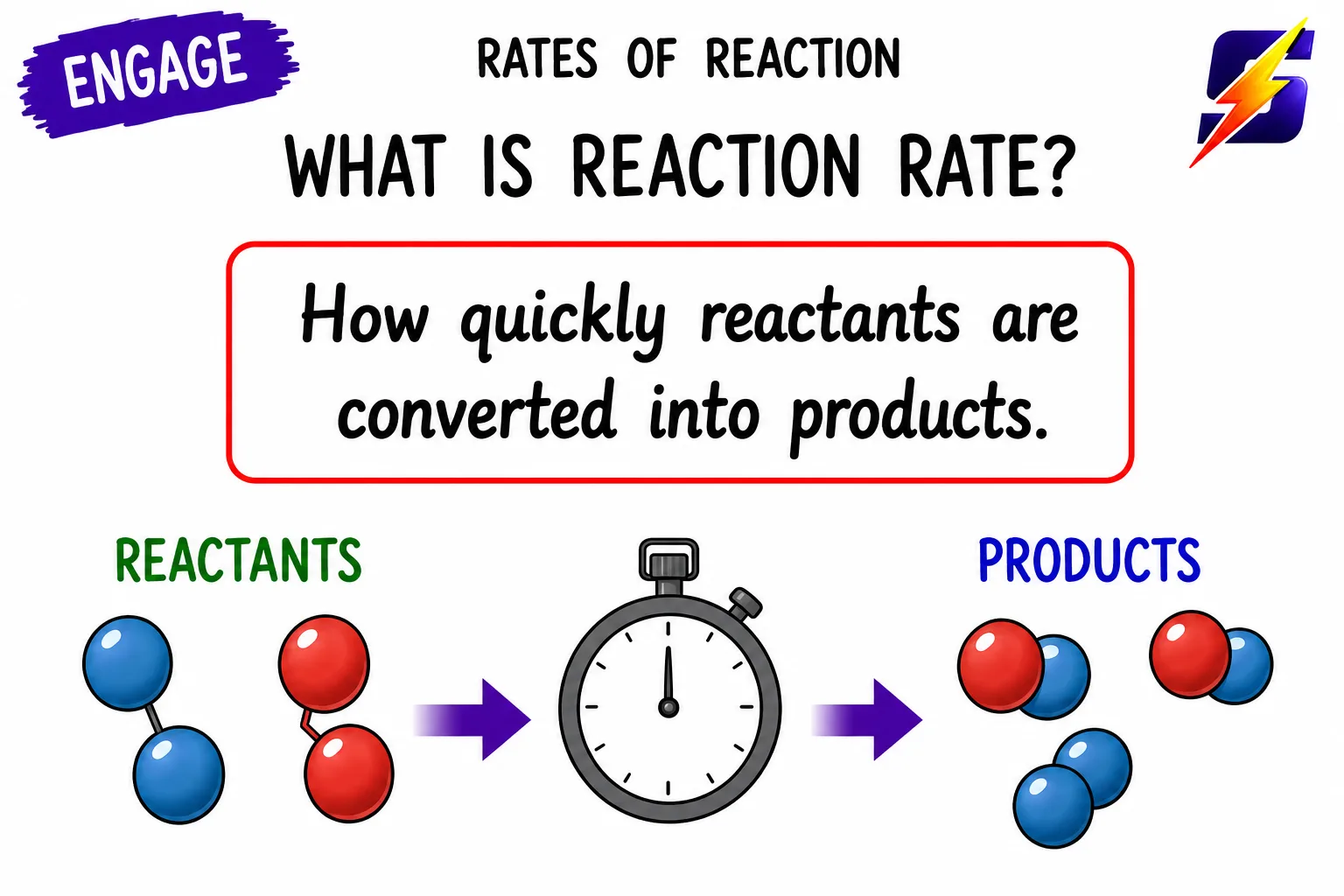
⭐ +165 XP- ✓Define rate of reaction and describe methods for measuring it.
- ✓Explain how various factors affect the rate of chemical reactions.
- ✓Describe the collision theory and its application to rates of reactions.
- ✓Investigate experimentally the effect of concentration, temperature, surface area and catalysts on reaction rate.
- ✓Relate reaction rate to real-life and industrial applications within the Caribbean context.
⏱ 0 mins🎯 33 marks
Engage
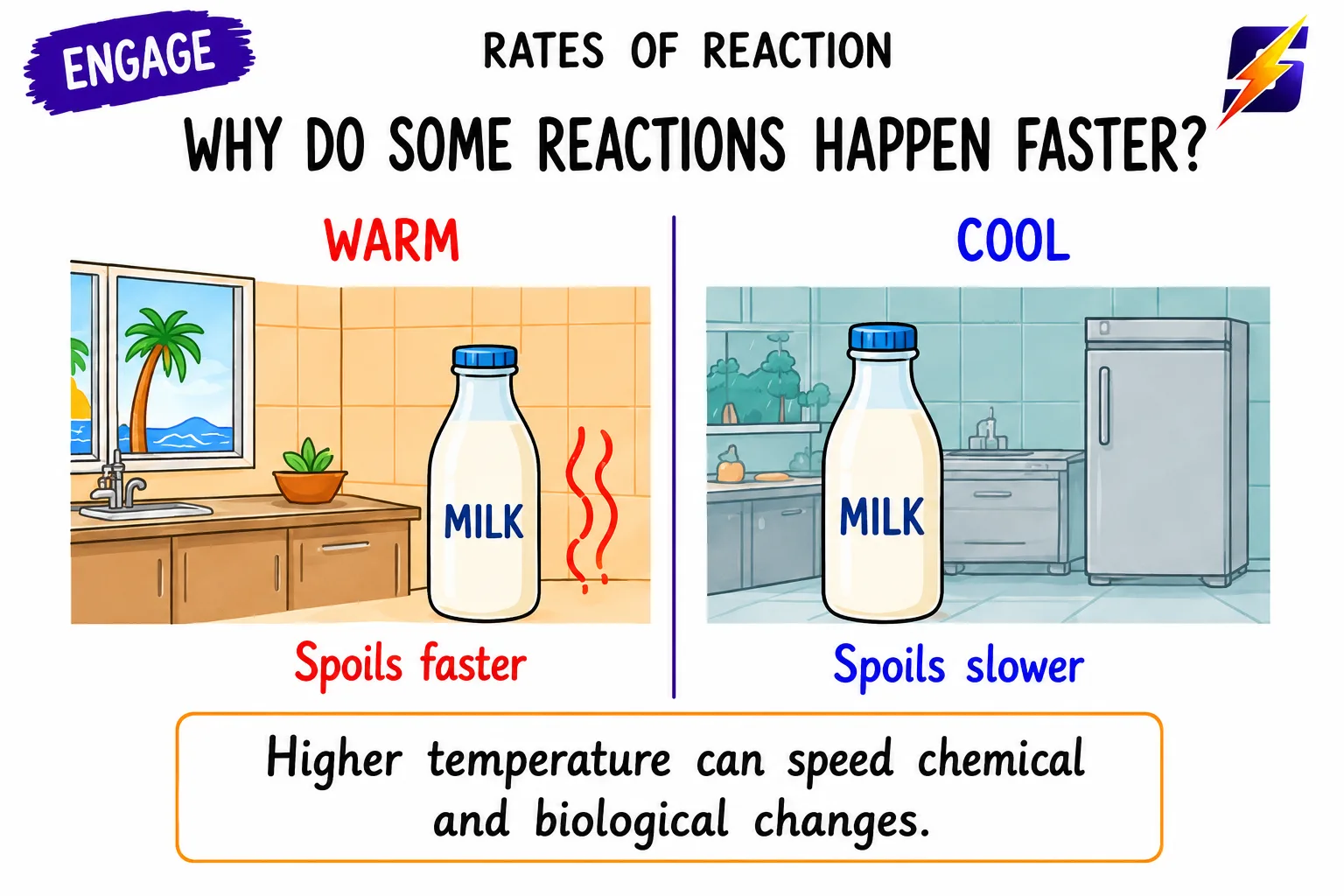
Have you ever noticed that milk spoils faster in hot weather, or that sugar dissolves more quickly in hot tea? These are everyday examples of how the rate of a reaction can change. In Chemistry, understanding these rates helps industries such as food processing, pharmaceuticals, and even sugar refining in the Caribbean control how fast reactions occur.
1 / 5
← swipe to move between steps →
0%
Lesson progress0 / 33 marks
✓ 0 correct✕ 0 mistakes0 / 28 answered
Let's get started, you've got this! 💪