A3.2 - Interdependence of Organisms
⭐ +215 XP- ✓Explain the ways in which other organisms depend on plants either directly or indirectly.
- ✓Explain the principles of a food chain.
- ✓Construct food chains and food webs from both terrestrial and aquatic (marine and freshwater) habitats.
- ✓Identify the trophic levels of organisms in a food chain.
- ✓Relate interdependence of organisms to the stability of Caribbean ecosystems.
⏱ 0 mins🎯 43 marks
Engage
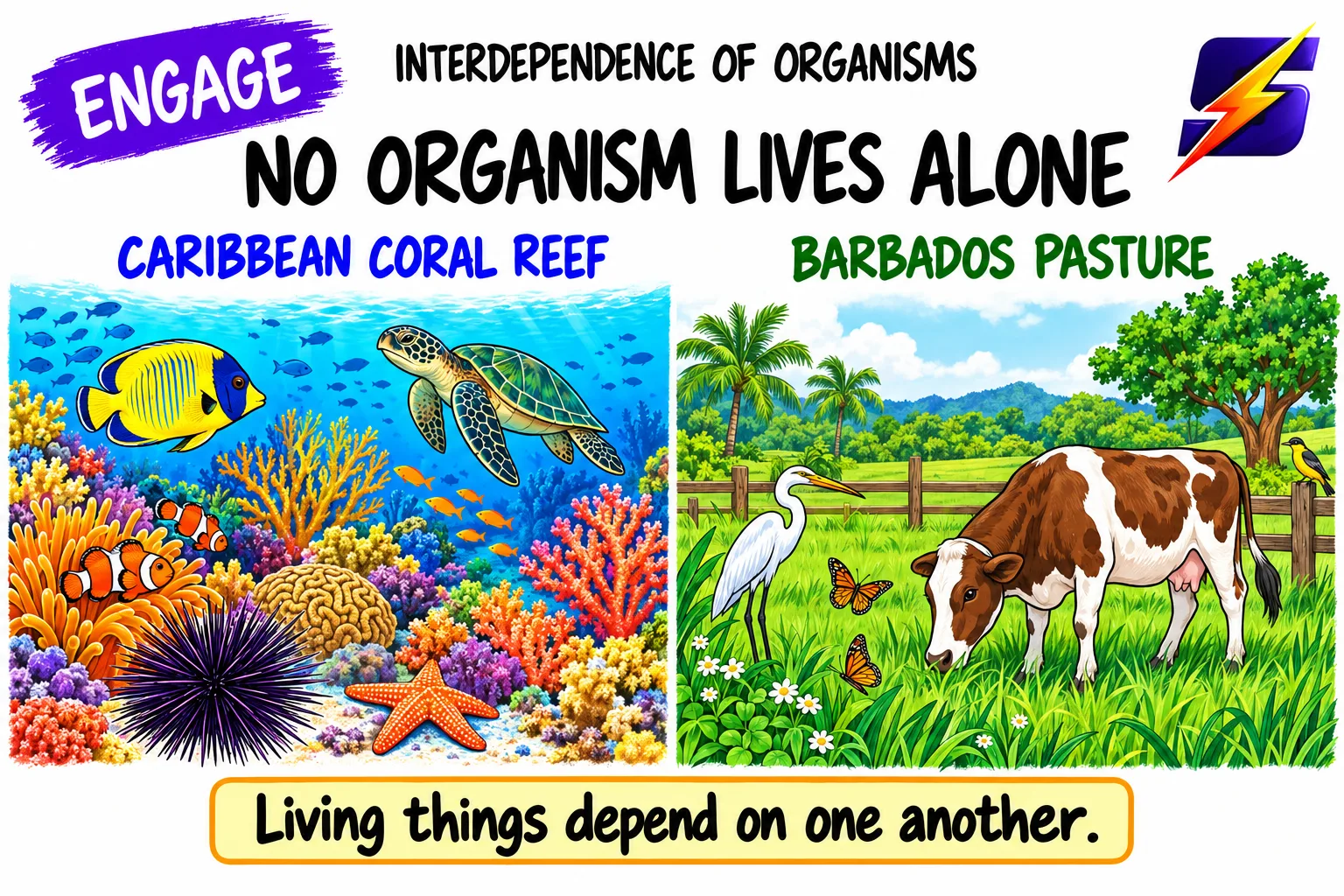
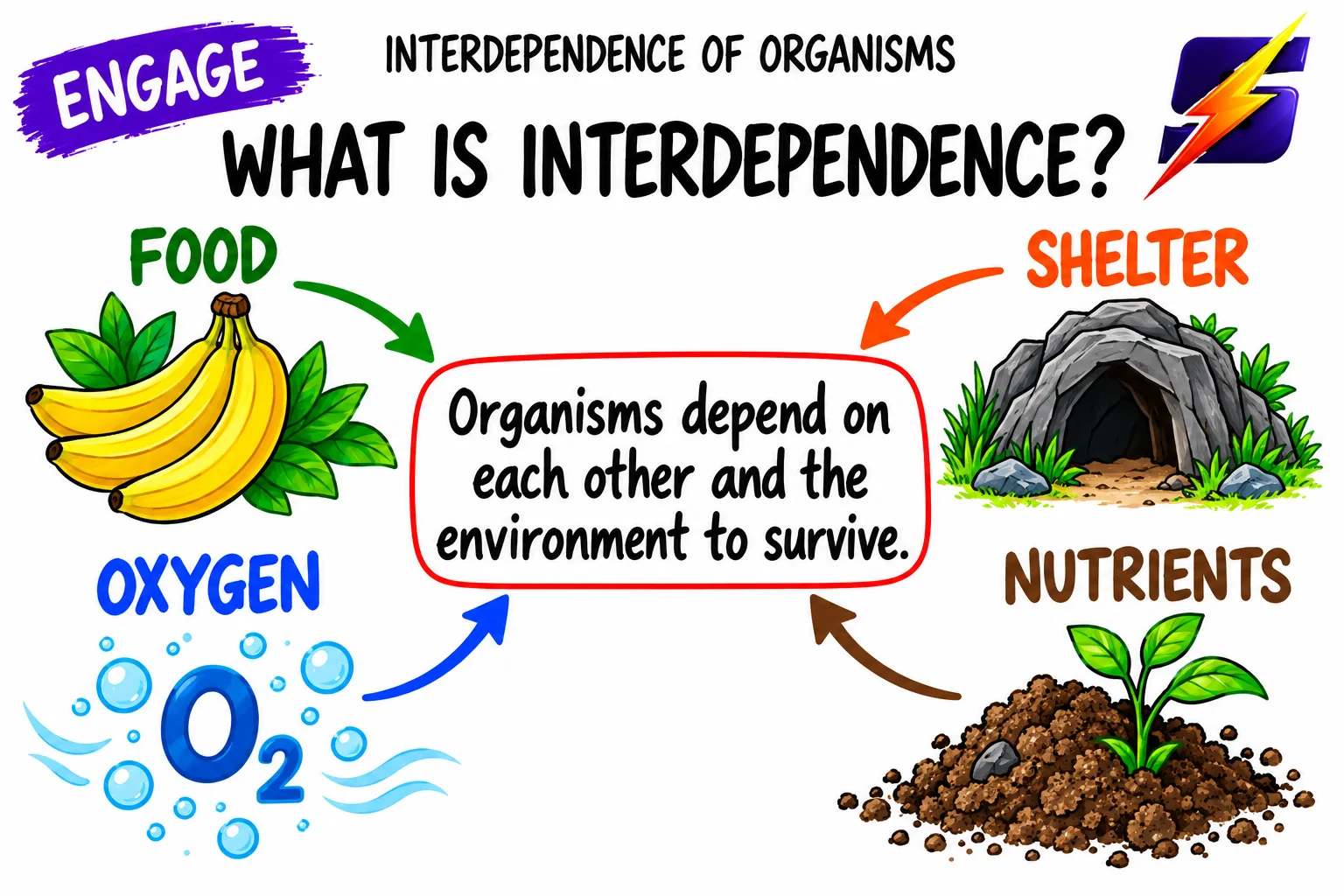
Picture a coral reef in Jamaica. Tiny algae and seagrass use sunlight to make food. Small fish eat the plants, bigger fish eat the small fish, and finally a shark eats the bigger fish. On land, in a pasture in Barbados, grass is eaten by goats, goats are eaten by humans. In both cases, energy flows from plants to animals. This is interdependence, living things depending on each other to survive. TIP: When you think of interdependence, think “no organism lives alone”, each one is part of a feeding relationship.
1 / 5
← swipe to move between steps →
0%
Lesson progress0 / 43 marks
✓ 0 correct✕ 0 mistakes0 / 32 answered
Let's get started, you've got this! 💪