A1.2 - Animal and Plant Cells
⭐ +185 XP- ✓Identify the main structures of a typical animal cell and a typical plant cell.
- ✓State the functions of the cell membrane, cytoplasm, nucleus and mitochondria.
- ✓Describe the extra structures found in plant cells: the cell wall, chloroplasts and a large vacuole.
- ✓Compare the structure of a typical animal cell with a typical plant cell.
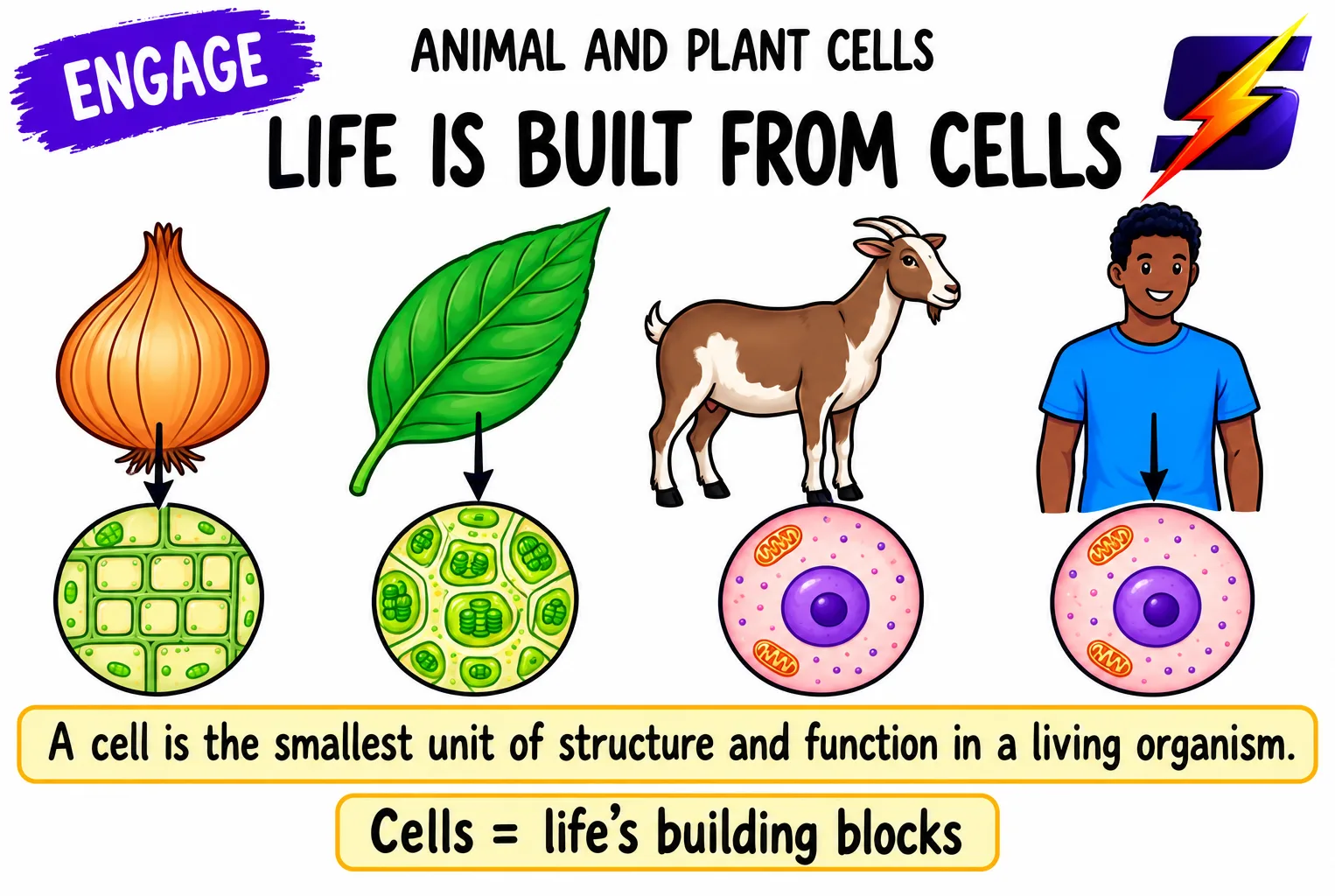
- ✓Explain that the cell is the basic unit of structure and function in living organisms.
⏱ 0 mins🎯 37 marks
Engage
Before today, had you studied animal and plant cells in school?
1 / 5
← swipe to move between steps →
0%
Lesson progress0 / 37 marks
✓ 0 correct✕ 0 mistakes0 / 27 answered
Let's get started, you've got this! 💪