5.3 - Bays and Beaches
⭐ +235 XP- ✓Explain wave refraction as waves approach the shore
- ✓Describe how longshore drift moves sand along the coast
- ✓Explain why beaches form in bays between two headlands
- ✓Describe how beaches are affected by marine and onshore environments
⏱ 0 mins🎯 47 marks
Engage
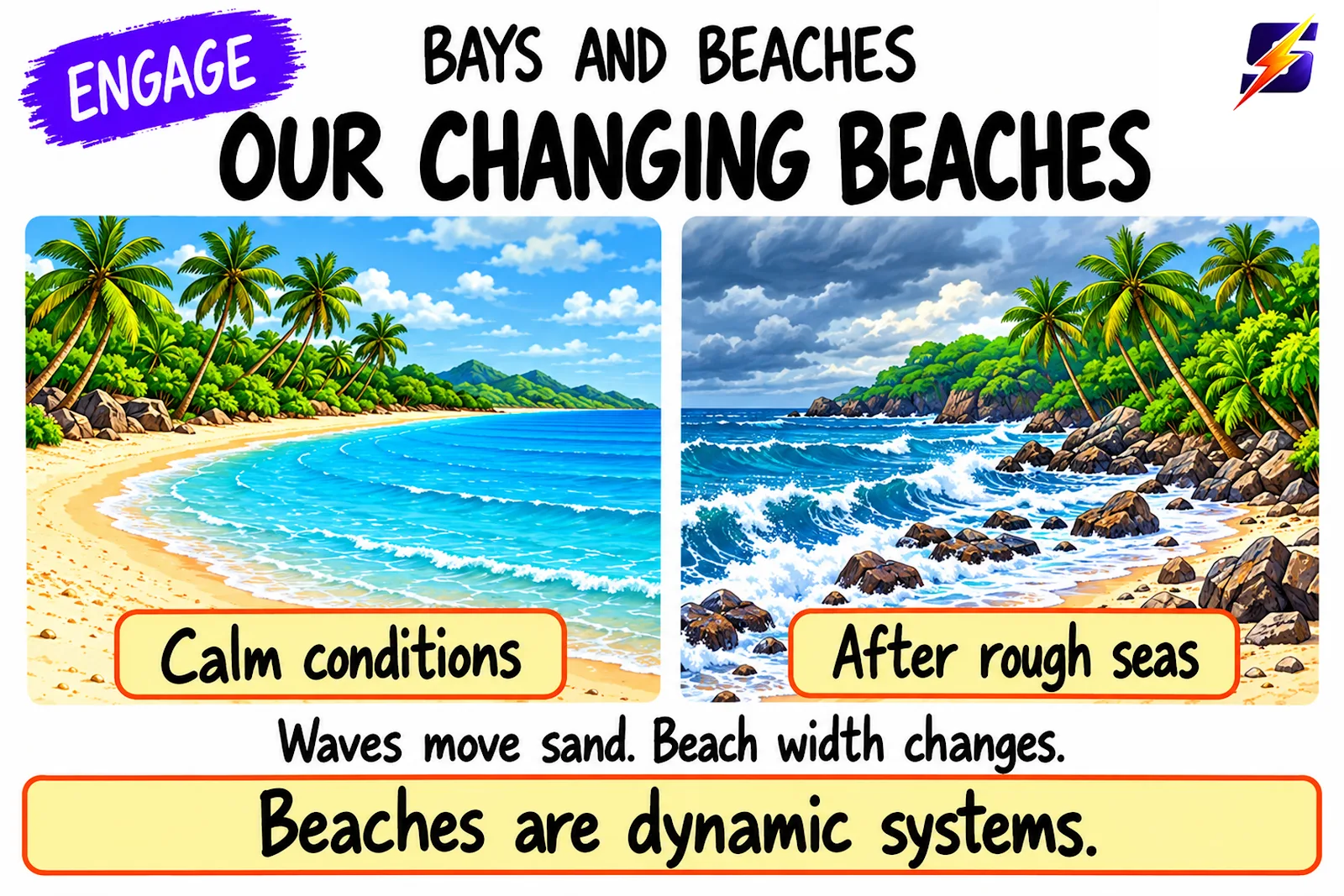
Think about your favourite Caribbean beach. Have you noticed how the sand seems to ‘move’ after a storm, or how some beaches get wider while others shrink? Exposed windward coasts (Atlantic‑facing) often have higher‑energy waves, while many leeward bays are calmer, perfect for beaches.
1 / 5
← swipe to move between steps →
0%
Lesson progress0 / 47 marks
✓ 0 correct✕ 0 mistakes0 / 31 answered
Let's get started, you've got this! 💪