5.1 - Waves in Action
⭐ +295 XP- ✓Explain how waves shape coastal landforms through erosion, transportation and deposition.
- ✓Distinguish between constructive and destructive waves using features such as wave shape, wavelength, frequency, swash and backwash.
- ✓Explain why erosion is more powerful on high‑energy windward coasts than on low‑energy leeward coasts.
⏱ 0 mins🎯 59 marks
Engage
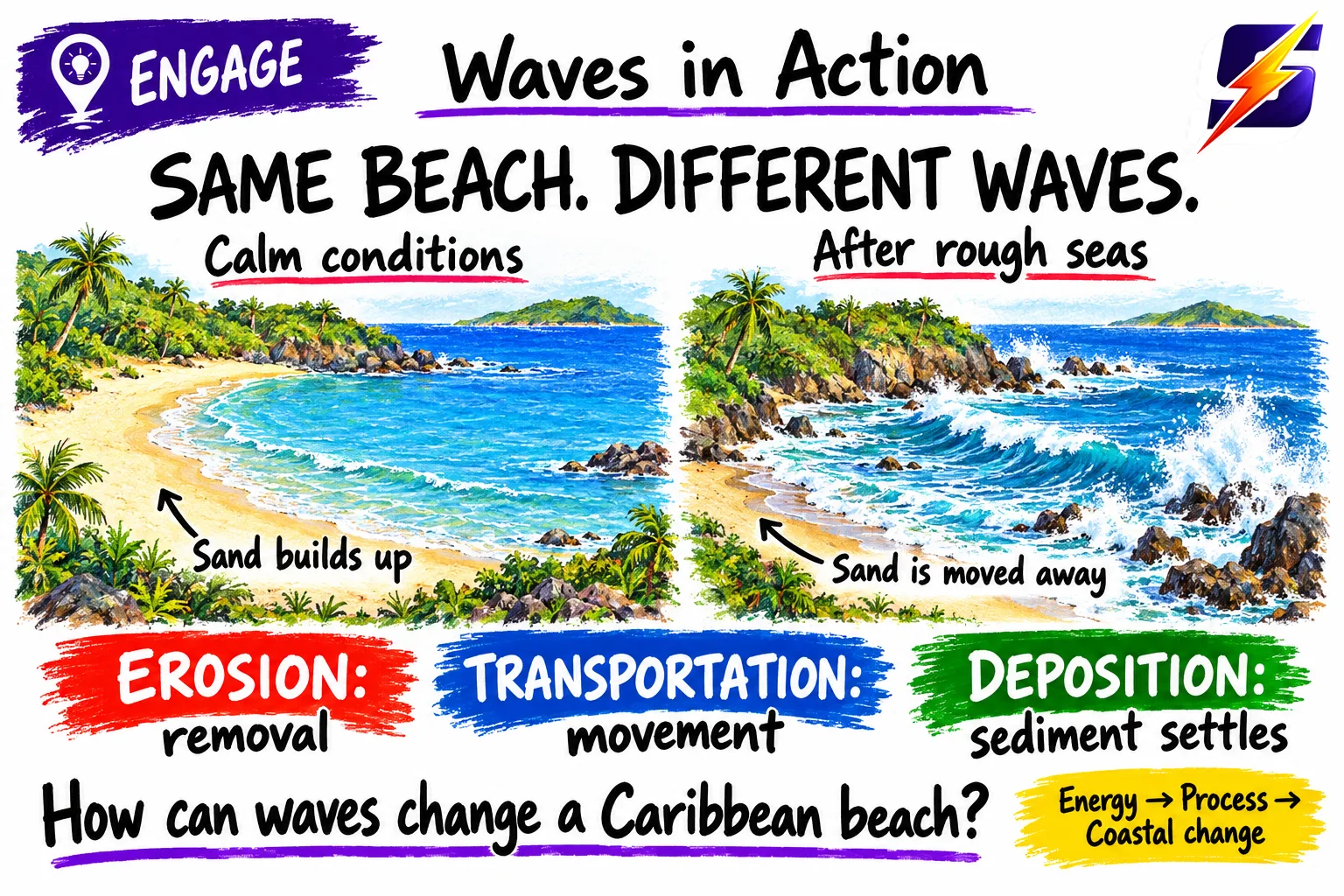
Ever noticed how a beach can look wide and sandy one week… then suddenly narrow, rocky, and ‘washed out’ after rough seas? That’s waves acting like a moving conveyor belt, shifting sand and pebbles up and down the shore, and sometimes tearing the coastline back. Caribbean link: On Barbados, beaches can change quickly, up to 15,000 m³ of sand may be shifted in a few weeks on a sheltered west-coast beach.
1 / 3
← swipe to move between steps →
0%
Lesson progress0 / 59 marks
✓ 0 correct✕ 0 mistakes0 / 34 answered
Let's get started, you've got this! 💪