7.2 - Mole and Gas Volumes Part 2
⭐ +180 XP- ✓Define molar volume of a gas under standard conditions.
- ✓Use the molar volume to calculate the volume, mass or number of moles of a gas.
- ✓Apply the mole concept to reactions involving gases.
- ✓Perform calculations using balanced chemical equations involving gaseous reactants and products.
⏱ 0 mins🎯 36 marks
Engage
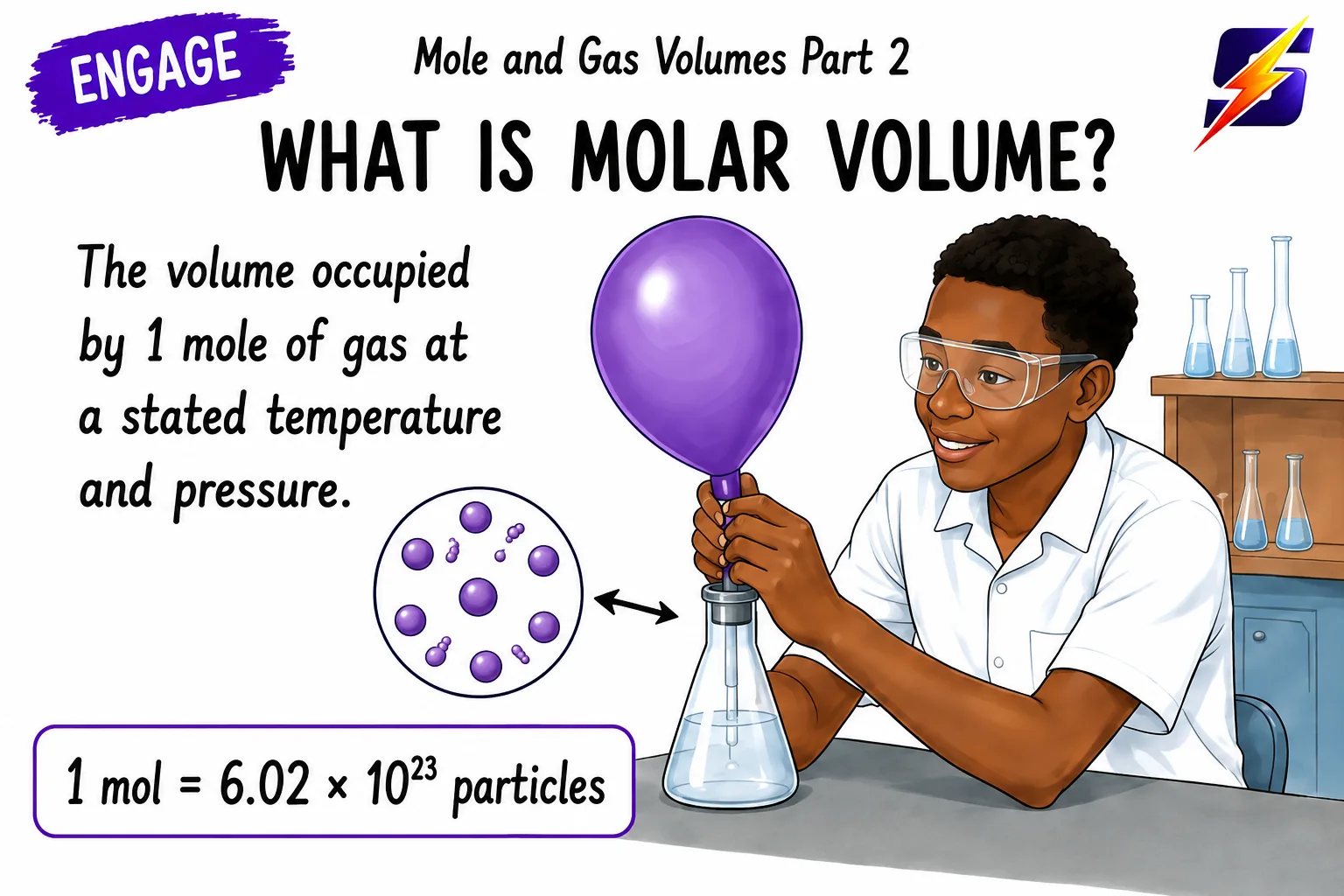
Imagine taking a deep breath in the warm Caribbean air. Each breath you take contains thousands of litres of gas made up of millions of molecules, yet chemists measure them all using one unit: the mole. When dealing with gases, we use the molar volume, the space one mole of gas occupies at a specific temperature and pressure.
1 / 5
← swipe to move between steps →
0%
Lesson progress0 / 36 marks
✓ 0 correct✕ 0 mistakes0 / 28 answered
Let's get started, you've got this! 💪