5 - Structure and Bonding
⭐ +215 XP- ✓Describe and explain chemical bonding in terms of the behaviour of electrons.
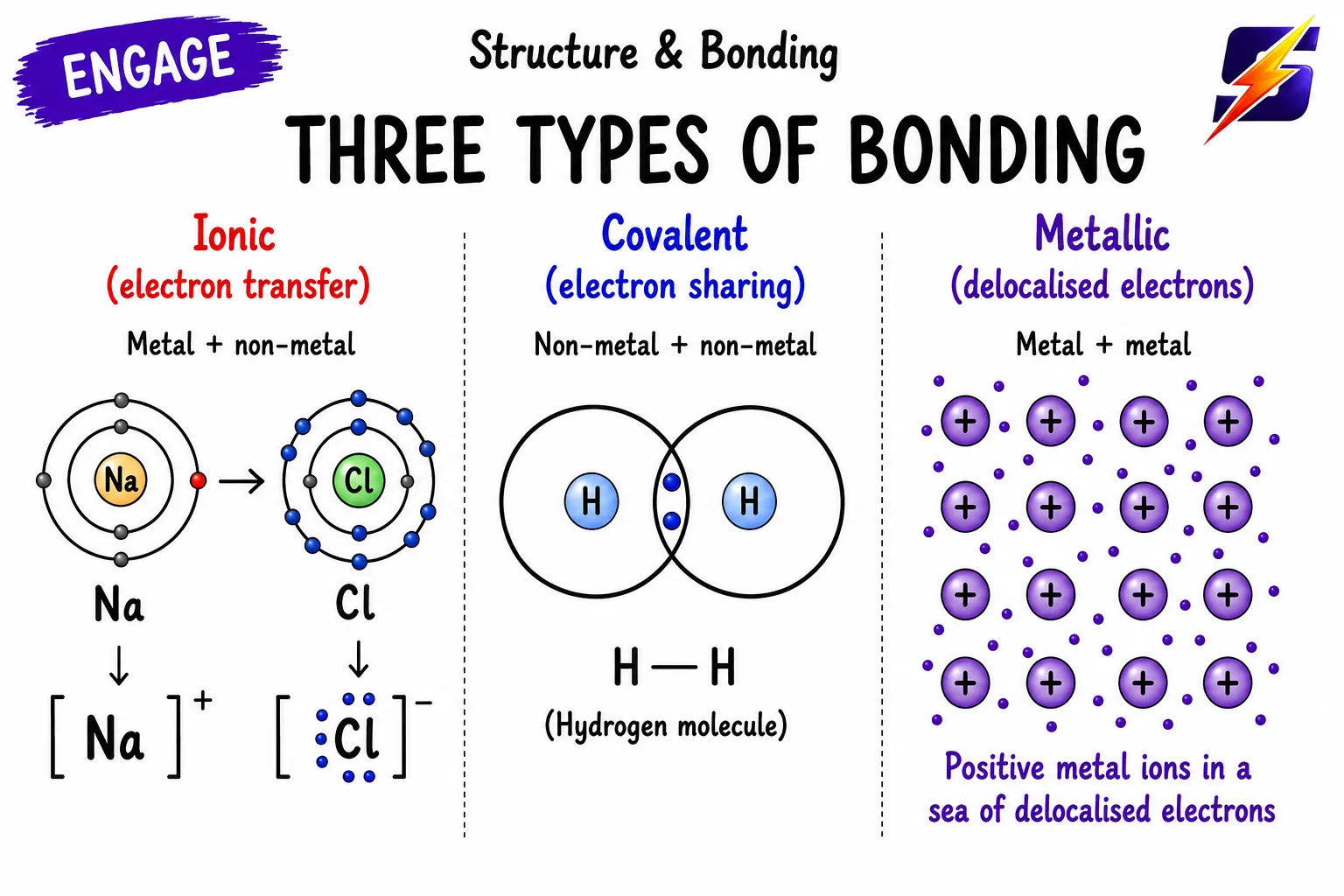
- ✓Distinguish between ionic, covalent, and metallic bonding.
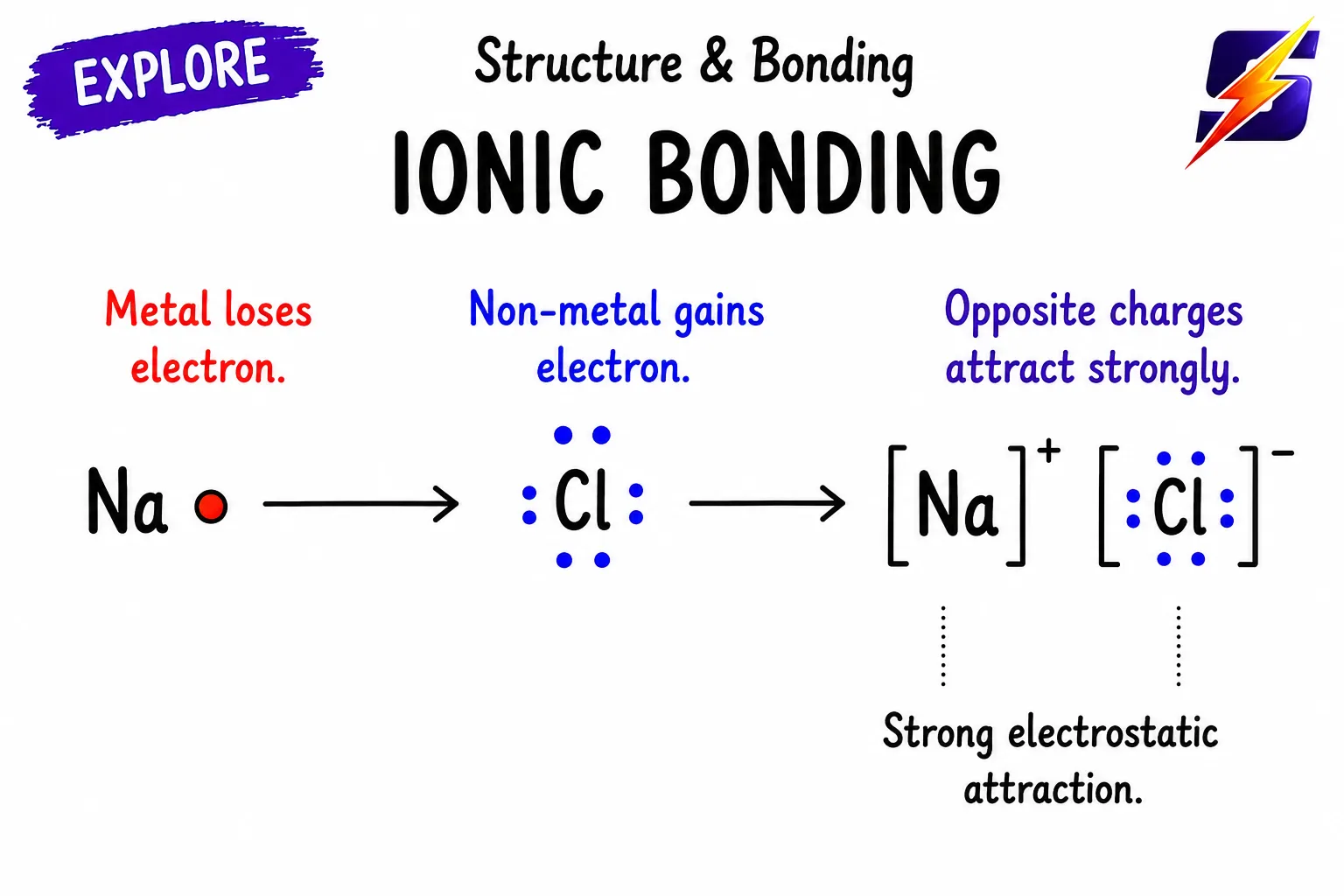
- ✓Illustrate bond formation using dot-and-cross diagrams.
- ✓Write correct chemical formulae of ionic compounds.
- ✓Explain how the structure of solids affects their physical properties.
- ✓Compare the properties of ionic, covalent, and metallic substances.
- ✓Explain the structure and properties of diamond and graphite.
- ✓Define and give examples of allotropy.
⏱ 0 mins🎯 43 marks
Engage
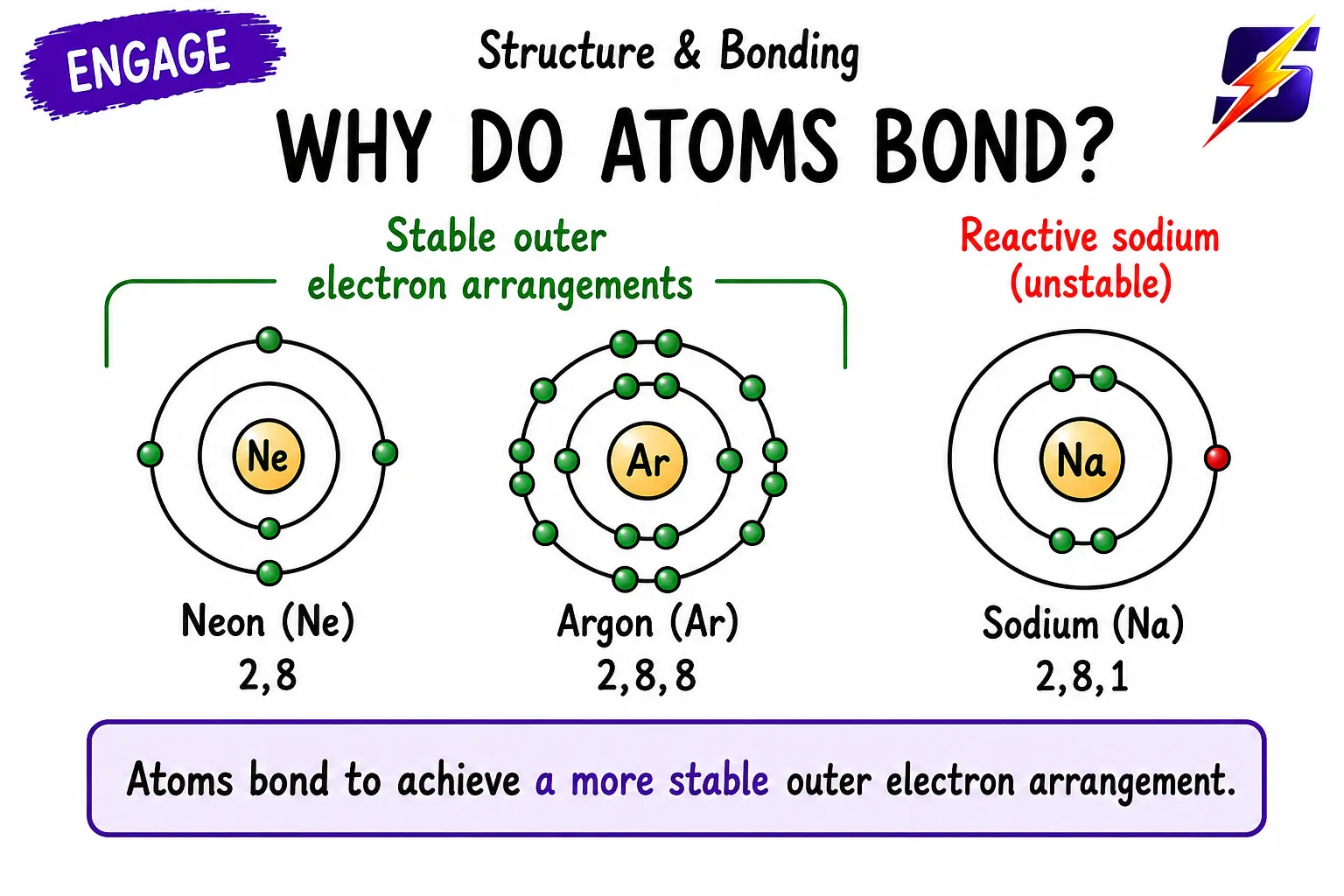
Why does sodium metal react explosively with water but neon gas doesn’t? The answer lies in stability, all atoms want to achieve a full outer shell of electrons (like the noble gases). Atoms combine through chemical bonding to become stable, forming compounds with new properties.
1 / 8
← swipe to move between steps →
0%
Lesson progress0 / 43 marks
✓ 0 correct✕ 0 mistakes0 / 27 answered
Let's get started, you've got this! 💪